The intelligence behind every question you practise.
PIE is not a chatbot and not a question shuffler. It is a measurement engine that reads how you answer, builds evidence about how you perform, and is the only system that decides what you practise next.
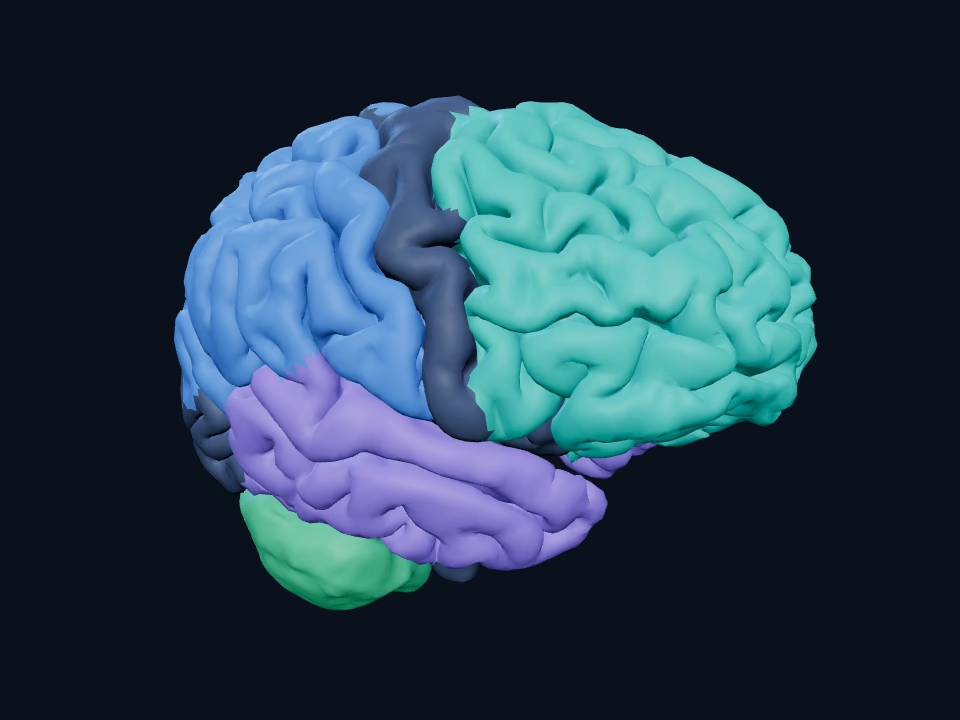
A simulated cognitive process for teaching, using illustrative regional emphasis. It is not a recording of brain activity or a validated map of sequential neural processing. Play the five stages
Architecture
From raw answers to one traceable decision.
Signals PIE observes
Answer chosen and correctness
Time on question
Answer changes and their direction
Confidence rating
Mode: drill or mock exam
Review and flashcard recall
PIE models
Capability knowledge by topic, from first attempts
Calibration how sure you felt against how often you were right
Timing your pace against each question's usual pace
Decision answer switching and its effect
Learning how your results change with practice
Sustained performance how settled your performance is
What you see
Next best stepBeta
PIE Intelligence viewsLive
Evidence behind each findingBeta
Readiness DNAComing soon
Confidence calibration
Knowing when you know.
Each answer can carry a confidence rating. PIE compares how sure you felt with how often you were right, by topic, so you learn where to slow down.
What a calibration finding looks likeBeta
“When you marked answers as Sure in this topic, fewer were right than you expected. Slow down on these before committing.”
Example wording, not your data. PIE shows a finding only when it has enough evidence, together with how certain it is.
Principles
How PIE earns your trust.
Sole adaptive authority
One engine chooses your practice. No parallel recommender and no fixed rotation. AI Lab explains. PIE decides.
Traceable decisions
Recommendations link back to the answers that caused them.
Honest uncertainty
When evidence is thin, PIE says there is not enough evidence yet instead of guessing.
Your data stays yours
Each candidate sees only their own evidence.
Neural Core
Five stages of clinical reasoning, made visible.
The Neural Core is a teaching simulation. It follows one STEMI question through five stages so you can see where reasoning can go wrong.
PIE Neural Core · one STEMI question
SIMULATED
01 / 05 SIMULATED
Demo AMC style MCQDemo, not from the bank
A man aged 58 has had central crushing chest pain for 40 minutes. He is sweaty and nauseated. His ECG shows ST elevation in II, III and aVF. The nearest PCI centre is 25 minutes away. The regional pathway estimate from first medical contact to wire crossing is 105 minutes.
What is the most appropriate reperfusion strategy?
APrimary PCI
BThrombolysis
CRepeat troponin in 3 hours
DCT pulmonary angiogram
Reading the stem. Nothing is highlighted yet.
Findings picked out
Age 58
40 min symptoms
Crushing central pain
Sweaty, nauseated
ST up in II, III, aVF
PCI 25 min away
FMC-to-wire 105 min
Inferior STEMILeading
Aortic dissectionKeep in mind
PericarditisLess likely
A and B compete. Compare the estimated first medical contact-to-wire-crossing time with the 120-minute threshold. C and D do not provide reperfusion for this STEMI.
The estimated first medical contact-to-wire-crossing time is 105 minutes, within the 120-minute window in which primary PCI is preferred. If primary PCI cannot be delivered within 120 minutes, fibrinolysis is recommended when the person is eligible and has no absolute contraindication. If fibrinolysis is chosen, it should be delivered as soon as possible, ideally within 30 minutes of first medical contact. 2025 Australian ACS guideline.
Teaching example only. Real treatment requires clinician assessment, reperfusion eligibility and contraindication screening, and the local STEMI pathway.
AnswerA
ConfidenceSure
Time and changes41 s · 0
Stage 1 · Clinical stimulus The question stem arrives. In this simulation, visual input passes through occipital areas to the parietal lobe.
Stage 2 · Evidence extraction Key findings are picked out and held in mind: symptom onset, pain pattern, ST elevation in II, III and aVF, and the estimated time from first medical contact until wire crossing.
Stage 3 · Hypothesis formation Candidate diagnoses are retrieved. Inferior STEMI leads, aortic dissection is kept in mind, pericarditis is less likely.
Stage 4 · Hypothesis competition Options compete. The estimated time from first medical contact until wire crossing is compared with the 120 minute threshold before choosing primary PCI or fibrinolysis.
Stage 5 · Decision and response An answer is committed with a confidence rating. PIE records the answer, the time taken, any changes and the confidence.
Parietal
Prefrontal
Temporal
Anterior cingulate
Cerebellum
What PIE reads from this attempt
Demo values
Accuracy
Correct
A chosen on the first attempt
Answer stability
0 changes
No switch between A and B
Time management
41 s
Against a 57 s demo item median
Confidence calibration
Sure, correct
Confidence matched the outcome
Illustrative values for this one demo answer. They are not statistics about any candidate, and PIE never predicts an exam result.
A simulated cognitive process for teaching, using illustrative regional emphasis. It is not a recording of brain activity or a validated map of sequential neural processing. The 3D model is built from a de-identified research scan (OpenNeuro ds003787, CC0). Regions are coloured for teaching.
Simulated for teaching. It never shows your brain activity, and the demo values are not candidate data.
Questions about PIE
Is PIE an AI chatbot?
No. PIE is a measurement and decision engine. AI Lab (beta) can explain your PIE results in plain language using your own OpenAI key, but it never makes decisions.
Does Zyntra read my brain activity?
No. The Neural Core shows a simulated model of reasoning for teaching. PIE only uses how you answer questions.
Will PIE tell me if I will pass?
No. PIE shows the evidence it has about your practice and how certain it is. It does not predict exam results.
Cookies and analytics
We use strictly necessary storage to keep you signed in and secure. If you accept analytics, Zyntra may record first-party visit telemetry. On public AMC pages, Google Analytics 4 and Microsoft Clarity may also measure approved page views and marketing interactions. Those tools are excluded from the NEET host and private candidate routes. You can change your choice later in Cookie settings.