Answer AMC style MCQs while the Performance Intelligence Engine reads your accuracy, timing, answer changes and confidence. Then it chooses what you practise next and shows why.
A$1 card check, not refunded. Then 7 days of full access. From A$39 a month after that.
PIE Neural Core · one STEMI question
SIMULATED
01 / 05 SIMULATED
Demo AMC style MCQDemo, not from the bank
A man aged 58 has had central crushing chest pain for 40 minutes. He is sweaty and nauseated. His ECG shows ST elevation in II, III and aVF. The nearest PCI centre is 25 minutes away. The regional pathway estimate from first medical contact to wire crossing is 105 minutes.
What is the most appropriate reperfusion strategy?
APrimary PCI
BThrombolysis
CRepeat troponin in 3 hours
DCT pulmonary angiogram
Reading the stem. Nothing is highlighted yet.
Findings picked out
Age 58
40 min symptoms
Crushing central pain
Sweaty, nauseated
ST up in II, III, aVF
PCI 25 min away
FMC-to-wire 105 min
Inferior STEMILeading
Aortic dissectionKeep in mind
PericarditisLess likely
A and B compete. Compare the estimated first medical contact-to-wire-crossing time with the 120-minute threshold. C and D do not provide reperfusion for this STEMI.
The estimated first medical contact-to-wire-crossing time is 105 minutes, within the 120-minute window in which primary PCI is preferred. If primary PCI cannot be delivered within 120 minutes, fibrinolysis is recommended when the person is eligible and has no absolute contraindication. If fibrinolysis is chosen, it should be delivered as soon as possible, ideally within 30 minutes of first medical contact. 2025 Australian ACS guideline.
Teaching example only. Real treatment requires clinician assessment, reperfusion eligibility and contraindication screening, and the local STEMI pathway.
AnswerA
ConfidenceSure
Time and changes41 s · 0
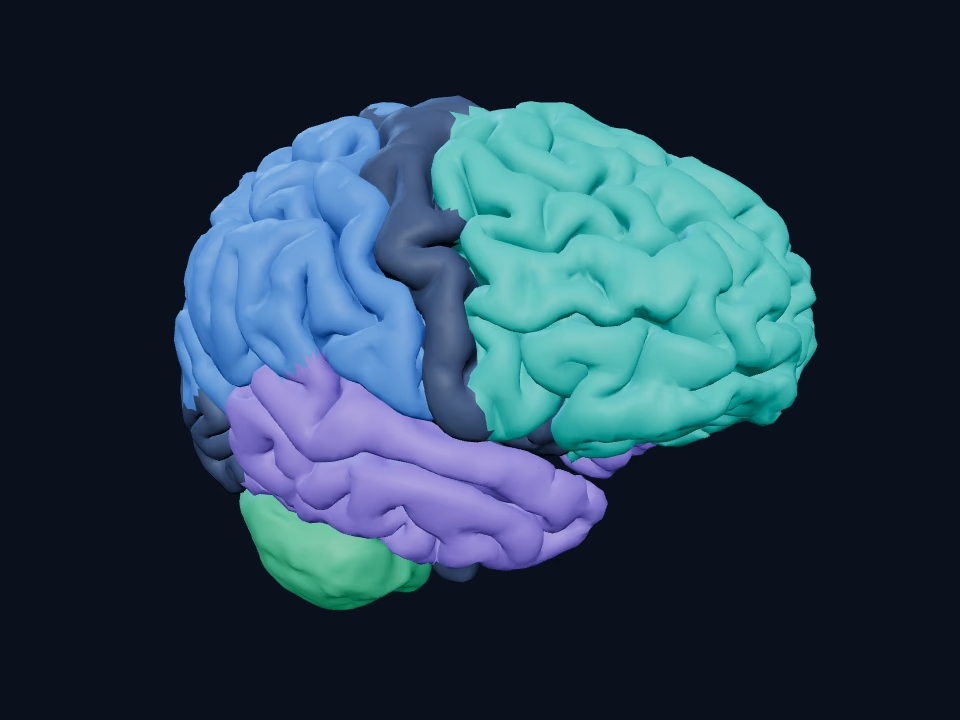
Stage 1 · Clinical stimulus The question stem arrives. In this simulation, visual input passes through occipital areas to the parietal lobe.
Stage 2 · Evidence extraction Key findings are picked out and held in mind: symptom onset, pain pattern, ST elevation in II, III and aVF, and the estimated time from first medical contact until wire crossing.
Stage 3 · Hypothesis formation Candidate diagnoses are retrieved. Inferior STEMI leads, aortic dissection is kept in mind, pericarditis is less likely.
Stage 4 · Hypothesis competition Options compete. The estimated time from first medical contact until wire crossing is compared with the 120 minute threshold before choosing primary PCI or fibrinolysis.
Stage 5 · Decision and response An answer is committed with a confidence rating. PIE records the answer, the time taken, any changes and the confidence.
Parietal
Prefrontal
Temporal
Anterior cingulate
Cerebellum
A simulated cognitive process for teaching, using illustrative regional emphasis. It is not a recording of brain activity or a validated map of sequential neural processing. The 3D model is built from a de-identified research scan (OpenNeuro ds003787, CC0). Regions are coloured for teaching.
The problem
A score tells you how many you got right. It does not tell you why the others went wrong.
What Zyntra does
PIE looks at how you answer, not only what you answer. It notices when you change right answers to wrong ones, when you rush, and when “sure” is not really sure. Then it puts the right questions in front of you.
Benefits
Know where your next hour should go.
Live
Practice chosen for you
PIE picks the next questions from your own evidence. No fixed subject rotation.
Beta
Fix habits, not only gaps
See answer changes that hurt you and topics where you rush.
Beta
Trust your confidence
Learn when your confident answers really are right.
Beta
Findings show their evidence
Supported views show the practice signals behind a finding.
How it works
Three steps, repeated every session.
01
Practise
Answer AMC MCQs in topic drills or a timed mock exam under exam conditions.
02
PIE reads the signals
Accuracy, time, answer changes and confidence on every question.
03
Take the next best step
One clear action, with the reason and the evidence attached.
PIE Neural Core
Follow one STEMI question through five reasoning stages.
The question stem arrives. Visual input passes through occipital areas to the parietal lobe.
2
Evidence extraction
Prefrontal
Key findings are pulled out and held: age, chest pain, ST elevation in II, III and aVF, time to a PCI centre.
3
Hypothesis formation
Temporal
Candidate diagnoses are retrieved: inferior STEMI leads, aortic dissection is kept in mind.
4
Hypothesis competition
Anterior cingulate
Options compete. Primary PCI and thrombolysis are weighed; the others are ruled out.
5
Decision and response
Cerebellum
An answer is committed with a confidence rating, and PIE records the answer, time, changes and confidence.
The Neural Core is a simulated cognitive process for teaching. It is not a recording of brain activity.
What is ready
Clear about what is live and what is coming.
Live
AMC MCQ practice
Topic drills and timed mock exams, with explanations and a review queue.
Live
PIE Intelligence
Your performance from PIE evidence. Behaviour, confidence and evidence views are in beta.
Coming soon
Readiness DNA
A readiness profile built only from PIE evidence, with no invented scores.
Beta
Flashcards
Spaced repetition decks for facts you keep missing.
Beta
AI Lab
Explains your PIE findings with your own OpenAI key.
Under construction
OSCE preparation
Station practice is being built. It is not available yet.
Most question banks count what you got right. Zyntra studies how you got there, where your reasoning breaks, and what to train next.Most question banks count what you got right. Zyntra studies how you got there, where your reasoning breaks, and what to train next.
Pricing
Simple plans. Try it first.
7-day trial after an A$1 card check. Full access during the trial.
We run an A$1 card check, which is not refunded, and you get full access to everything that is live for 7 days. Your first charge runs at 10:00 Sydney time on the day the trial ends, unless you cancel before then.
What does Zyntra cost after the trial?
A$39 a month, or A$99 for 3 months. Prices are in Australian dollars.
How do I stop before I am charged?
Cancel any time in Settings > Billing. Cancel before the trial ends and you are not charged the plan price.
What is PIE?
The Performance Intelligence Engine reads accuracy, timing, answer changes and confidence on every question, then chooses your next practice and shows the evidence behind it.
Is the Neural Core a recording of my brain?
No. The Neural Core is a simulation for teaching how clinical reasoning unfolds. It is always labelled as simulated and never shows real brain activity.
Can I practise OSCE stations?
Not yet. OSCE station practice is being built and is not available in the current release.
What is AI Lab?
AI Lab is in beta. It uses your own OpenAI API key to explain your PIE findings and MCQ answers. AI Lab explains. PIE decides.
Is Zyntra linked to the Australian Medical Council?
No. Zyntra is independent and is not affiliated with or endorsed by the AMC.
Start training the way you actually think.
A$1 card check, then 7 days of full access. Your first charge runs at 10:00 Sydney time on the day the trial ends.
We use strictly necessary storage to keep you signed in and secure. If you accept analytics, Zyntra may record first-party visit telemetry. On public AMC pages, Google Analytics 4 and Microsoft Clarity may also measure approved page views and marketing interactions. Those tools are excluded from the NEET host and private candidate routes. You can change your choice later in Cookie settings.